
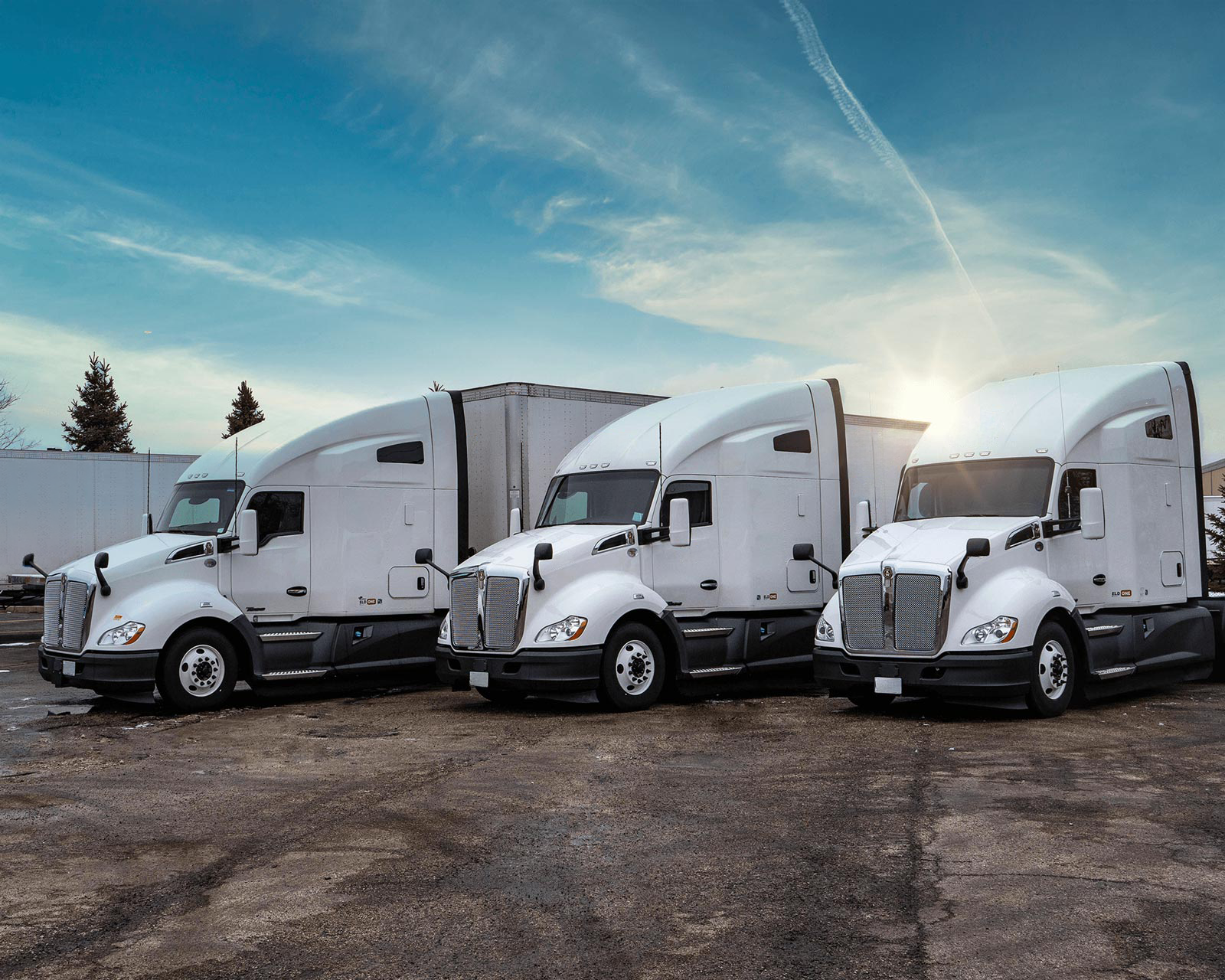
Growth is the point where most carriers get stuck. You've got the freight. You've got a shipper ready to give you more lanes. What you don't have is $400,000 in cash to put three more trucks on the road — and by the time you save it, the contract is gone.
That's the problem fleet leasing solves. Instead of buying each truck outright, you lease the equipment you need, when you need it, and let the freight the truck hauls pay for the truck.
What fleet leasing is
Fleet leasing means acquiring multiple trucks and trailers through lease agreements rather than outright purchase. You make predictable payments over an agreed term instead of tying up capital in equipment. Depending on how it's structured, the lease can end in a return or — with lease-to-own — in you holding the title.
For a growing carrier, the appeal is simple: your fleet size stops being limited by your bank balance.
Four ways carriers use leasing to grow
1. Say yes to bigger contracts
A shipper offers you a lane that needs three more trucks starting next month. Buying three trucks means a six-figure outlay you may not have. Leasing lets you add the capacity, take the contract, and let the revenue from that freight cover the payments. The contract funds the equipment instead of the equipment blocking the contract.
2. Preserve capital for everything else
A truck isn't your only cost. You need fuel, insurance, drivers, maintenance, permits, and working capital to survive the gap between hauling a load and getting paid. Every dollar sunk into buying a truck outright is a dollar you can't put toward keeping the operation running. Leasing keeps your cash where it's flexible.
3. Run newer, more reliable equipment
Older trucks are cheaper to buy and more expensive to own. Breakdowns mean missed appointments, unhappy shippers, and repair bills that land at the worst possible time. Leasing puts you in late-model, well-maintained equipment — which usually means better fuel economy, less downtime, and fewer surprise repairs.
4. Scale in steps instead of leaps
You don't have to jump from one truck to ten. Leasing lets you add trucks incrementally as your freight grows, so your fixed costs rise in step with your revenue rather than ahead of it. That's a much safer way to grow than betting a large purchase on volume you hope shows up.
How to structure a fleet lease well
The lease terms matter as much as the truck. Before you sign, get clear answers on:
- Term length. How long are you committed, and does that match how long you expect the freight to last?
- Payment schedule. Weekly or monthly? Does it line up with how your settlements actually come in?
- Maintenance responsibility. Who pays when a turbo or transmission goes? This is the single biggest hidden variable in any lease.
- Mileage limits. Are there caps, and what's the overage charge?
- End of term. Do you return the truck, renew, or take ownership? If ownership is the goal, make sure you're in a lease-to-own structure.
- Adding units. Can you add trucks to the agreement as you grow?
When buying still makes more sense
Leasing isn't automatically the right call. Buying tends to win when you have strong cash reserves and credit, plan to run a truck for many years and high miles, or want the asset and full resale value on your balance sheet.
Most growing carriers end up with a mix: they own or lease-to-own their long-term core trucks, and lease to add capacity as contracts come in. For a full breakdown, see Truck Leasing vs. Buying.
A simple framework for growing your fleet
- Know your cost per mile. You can't tell whether a truck will pay for itself until you know what it costs to run.
- Add capacity against committed freight, not hoped-for freight. A leased truck with no load is still a payment.
- Match the lease term to the contract term wherever you can.
- Review quarterly. If a leased truck has been running hard and profitably for a year, look at whether lease-to-own gets you a better long-term position.
Build your fleet with the right partner
Super Ego Holding leases and sells the equipment carriers actually need — Kenworth, Peterbilt, Volvo, Mack, and Freightliner trucks, plus dry van, reefer, and flatbed trailers. Everything is late-model and maintained to a high standard.
Ready to add trucks and take on more freight? Browse the fleet or apply for a lease and we'll help you build a structure that fits your growth plan. Working toward ownership on individual trucks? Start with our lease-to-own guide.