Compliance note: Federal registration rules changed significantly in 2026. Always confirm current requirements, fees, and forms directly at fmcsa.dot.gov before you file.
Going from company driver to owner-operator with your own authority is one of the biggest moves in trucking. It means you control your freight, your rates, and your business. It also means paperwork, insurance, and getting compliant with the FMCSA before you can legally haul for hire.
The big 2026 change: USDOT number over MC number
For years, interstate for-hire carriers needed both a USDOT number and an MC (motor carrier) docket number. In 2026 the FMCSA moved to using the USDOT number as the primary federal identifier, and began retiring the old MC/MX/FF docket numbers.
What this means for you: you'll apply for your USDOT number and your operating authority through FMCSA's current online registration system, and your USDOT number is the ID that follows your business going forward. Verify the exact process on fmcsa.dot.gov the week you apply — it's genuinely changing.
Step 1 — Set up your business
Before you register with FMCSA, set up the business itself:
- Form your company (most owner-operators choose an LLC for liability protection)
- Get an EIN from the IRS (free)
- Open a business bank account to keep freight income and expenses separate
Step 2 — Register with the FMCSA
Apply through FMCSA's registration system. In one application you'll:
- Get your USDOT number (no FMCSA fee for the number itself)
- Declare your operating authority type — for most owner-operators that's "motor carrier of property (general freight)"
- Pay the operating authority application fee (historically $300 per authority type — confirm the current fee)
Your authority won't go "active" immediately. There's typically a ~21-day protest period, and you must have insurance and your BOC-3 on file before it activates.
Step 3 — Get commercial truck insurance
Insurance is both a legal requirement and your biggest recurring cost.
- Your insurer files proof electronically with FMCSA (Form BMC-91 or BMC-91X)
- Minimum liability for general freight is $750,000 (many shippers require $1,000,000)
- You'll also want cargo insurance and physical damage coverage on the truck
Budget realistically: new-authority commercial truck insurance commonly runs $9,000–$15,000+ per year, and first-year operators pay more.
Step 4 — File your BOC-3 (process agents)
A BOC-3 designates a "process agent" — someone who can accept legal documents on your behalf — in every state where you operate. File through a process-agent service, usually for a one-time fee of about $20–$100. FMCSA requires a BOC-3 on file before your authority goes active.
Step 5 — Register for UCR
The Unified Carrier Registration (UCR) is an annual fee required of interstate for-hire carriers. For small operators running one or two trucks it's often under $100 per year. It's separate from your FMCSA registration and renews annually.
Step 6 — Stay compliant after you launch
Getting authority is the start, not the finish. Keep these on your calendar:
- MCS-150 biennial update — update your USDOT registration every two years. Miss it and your authority can be deactivated.
- IFTA (fuel tax reporting) and IRP (apportioned plates) for interstate operation
- Heavy Vehicle Use Tax (Form 2290)
- Drug & alcohol testing program enrollment
- ELD (electronic logging device) compliance and hours-of-service records
Step 7 — Get your truck
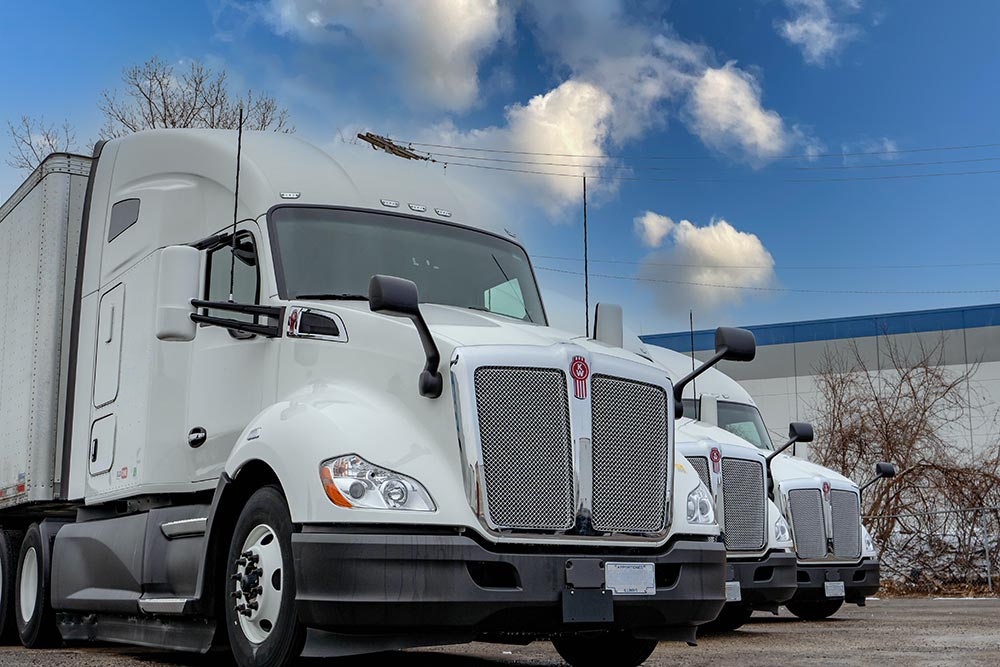
None of the above matters without equipment. This is where many new owner-operators stall: they've spent thousands on registration and insurance and don't have $130,000+ left to buy a truck.
That's exactly why leasing and lease-to-own exist. Instead of a massive upfront purchase, you can lease-to-own a late-model truck and build toward ownership while you run freight. Not sure which fits your situation? Our lease vs. buy breakdown compares the real costs.
Rough first-year cost checklist
| Item | Typical range (verify current) |
|---|---|
| USDOT number | $0 (FMCSA) |
| Operating authority | ~$300 / type |
| BOC-3 process agents | $20–$100 |
| UCR (1–2 trucks) | Under $100 |
| Commercial insurance | $9,000–$15,000+ / year |
| Truck & trailer | Financed, leased, or lease-to-own |
Start with the right equipment partner
Super Ego Holding helps new owner-operators get on the road without the six-figure upfront hit. We lease and sell well-maintained trucks and trailers — and we work with drivers who are just standing up their authority.
Ready to line up your first truck? Browse the equipment or apply for a lease and we'll help you match a truck to your plan.